
Between the 20th and the 23rd of July 2026, the Director of the OSCE Academy, Dr. Pal Dunay stayed in Vienna in order to participate in the Board of Trustees (BoT) meeting of the Academy and to report to the OSCE Permanent Council (PC) on the 21st and 23rd of July, respectively.
The BoT meeting focused on the work that has been on its agenda during the last nine months, including the establishment of an Audit and Risk Management Subcommittee (ARMS) of the BoT, a presentation on the report and findings of the Office of Internal Oversight (OIO), an overview of the financial situation of the Academy, and an update by the Academy’s Director.
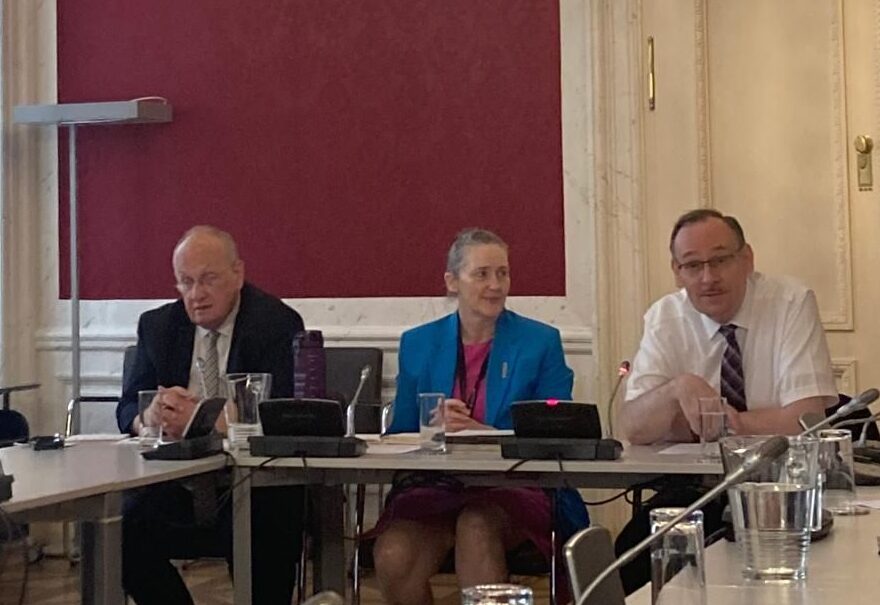
The report on the work of the OIO meant the completion of an eight-month long process that started with a visit of two members of the OIO team, followed by a draft report, its revisions and concluded in a management action plan. It provides helpful guidance to the Academy in further improving of its administrative work. As it was reported at the BoT meeting, a legal overview of the OSCE Academy has started analyzing the unique legal situation of the Academy and its harmony with Kyrgyz national law, and later also with OSCE rules and regulations. The Academy is also expecting an HR assessment. All these complement the 56 reporting lines the Academy had to meet during the last four years. With this the Academy can be reassured about the very high standards of its administrative work.
The Academy’s Director in his report to the BoT emphasized a successful consolidation of its work with reduced budget and personnel. The focus on the basic activities of the Academy, post-graduate and graduate teaching, research, conferences, and a platform for dialogue continue with a highly professional staff and with the most effective use of resources. The next cohort of MA students will consist of 55 students from Central Asia, Afghanistan, and from two extra-regional OSCE participating States while those MA students who started their studies in 2025 and will graduate in February 2027 represent a cohort of 50 students, including three who could not complete their studies a year earlier. The report also provided information about the recent institutional accreditation of the OSCE Academy, and its BA programme, complementing the accreditation of the three MA programmes granted earlier. The two annual security conferences held since the previous report at the PC in October 2025, and the publishing activity of the Academy was also mentioned and recognized. Due to the continuing generous contribution from the OSCE unified budget, the participating States, and two major direct donors, the Norwegian Institute of International Affairs (NUPI), and the Global Campus of Human Rights (GC), and also due to the considerate approach the financial situation of the Academy is stable and funding guarantees its perspective until close to the end of 2027.
During the visit, the Academy’s Director met representatives of the Conflict Prevention Centre and those of several delegations, including at a luncheon hosted by the OSCE Chairmanship. These meetings provided opportunities to exchange views concerning the main expectations of the OSCE delegations, and address the situation of the Academy with a focus on certain concrete matters, like student visas, tax payments and retention of personnel.
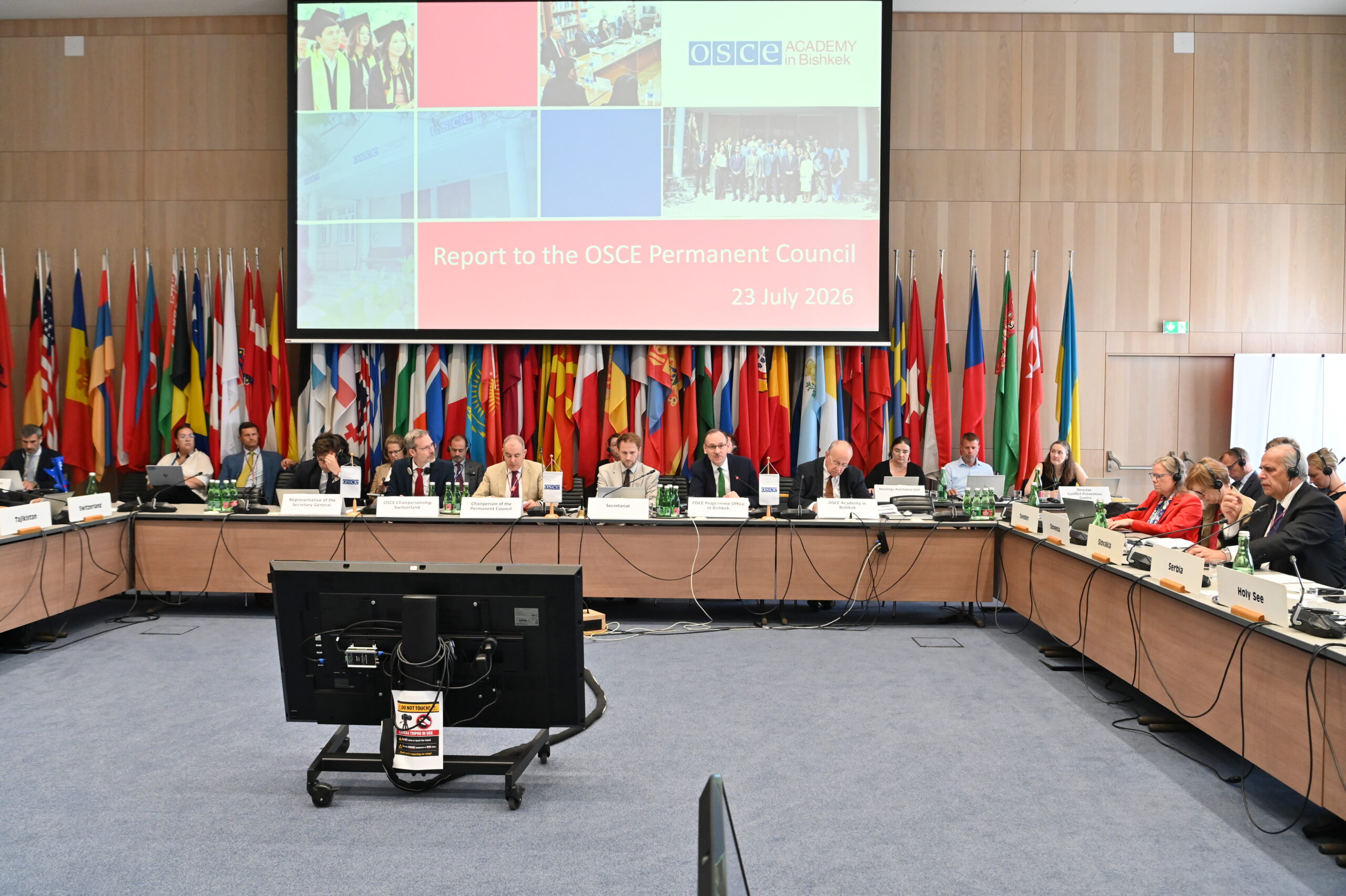
Photo credit: OSCE
The meeting of the PC is the annual opportunity to brief the 57 participating States. Hence its importance for the Academy. It complements the report of the Head of the OSCE Programme Office in Bishkek, and Chairman of the Board of Trustees of the OSCE Academy, Ambassador Volker Frobarth. Understandably, the focus of attention is on the report of the Programme Office, one of the largest OSCE field presences. However, it is a unique opportunity to sensitivise those participating States that are not members of the BoT, understand their expectations and receive feed-back on the work done at the Academy. The Academy certainly benefits from the attention due to its uniqueness as a regional educational institution. Eleven delegations asked for the floor and commented upon the two reports. It was reassuring to conclude that the Academy is in good standing and the delegations expect continuity with the work done currently. Beyond the recognition, and emphasis on its long-term contribution to the region, emphasis was put on the Academy being one of those institutions that continues to teach Afghan students among others, and brings together a young generation of future leaders. The question was raised how the Academy could increase its outreach beyond the region.