
On 10 November 2026, Mr. John DiPirro, Senior Political Adviser at the OSCE Programme Office in Bishkek, and Dr. Pal Dunay, Director of the OSCE Academy, highlighted the importance of sustained support in education and the intellectual potential of Afghan youth during the closing meeting of the Response to the Implications of the situation in Afghanistan for the OSCE Region (RIAOR) Repository programme and associated framework, held at the OSCE Secretariat in Vienna.
The meeting brought together representatives of OSCE participating States, the OSCE Secretariat and programme beneficiaries to review the RIAOR framework, reflect on its achievements and discuss future funding opportunities. The agenda also featured presentations on four selected projects that benefitted from RIAOR funding, addressing border security in Tajikistan, women’s economic empowerment throughout the region, combating trafficking in human beings in the OSCE area with an emphasis on Central Asia, and support to the OSCE Academy.
Mr. DiPirro emphasized the importance of the participation of Afghan students in the BA and MA programmes of the OSCE Academy since 2007 and the community of more than one-hundred Afghan graduates. As the students attending the 18 months long MA programmes and the four years long BA programme are selected from among hundreds of applicants, they represent a group of outstanding young intellectuals. The students who all benefit from tuition-free education and receive a modest stipend, also actively contribute to the knowledge of their fellow classmates that has been illuminating to many cohorts of students. The open-minded environment that promotes peer-to-peer learning, adds value to Afghan participation. Many Afghan students return to their home country upon the completion of their studies, e.g. one of them works at the state radio and television of Afghanistan now, others teach at various educational institutions, including universities, while some others pursue further MA or PhD studies in other parts of the world.
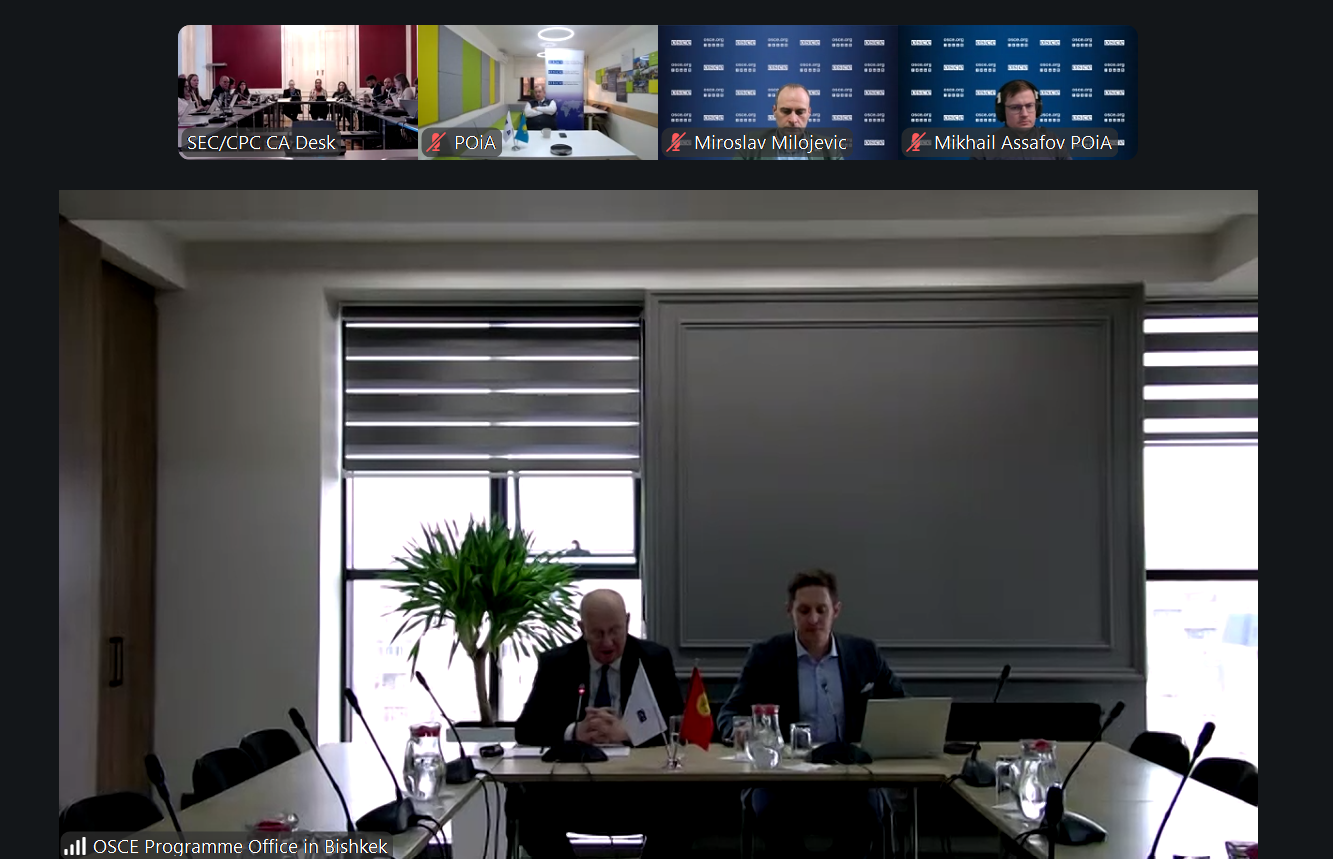
At the meeting, Dr. Dunay emphasized that the human dimension must remain central to discussions about Afghanistan’s future. He drew attention to the nearly 40 million people in Afghanistan who face significant limitations on their human development potential, both materially and intellectually. Dr. Dunay underlined that, while the OSCE Academy’s contribution to Afghanistan is indirect and understandably limited in scale, the institution remains committed to providing Afghan students with access to quality higher education and developing qualified professionals who may contribute to their country’s future.
He also expressed his gratitude to the donors who have continued supporting educational initiatives despite shifting international priorities and a challenging funding environment. He noted that, although many states have redirected resources towards hard security priorities, maintaining investment in education is a strategic commitment to the long term.
The importance of this support was further illustrated by Mr. Nematullah Akbari, an Afghan student enrolled in the OSCE Academy’s MA Programme in Politics and Security (2025–2027), who shared his personal experience of studying at the Academy with RIAOR support. Mr. Akbari is currently undertaking a three-month internship at the OSCE Secretariat in Vienna.
In his remarks, he highlighted how the tuition-free education and stipend provided by the OSCE Academy, with funding received through RIAOR, had removed significant financial barriers, allowing him to focus on his studies, research and professional development. He also emphasized the value of the Academy’s regional learning environment, which enables students to explore Afghanistan’s political and security challenges in the broader context of Central Asia and international affairs.
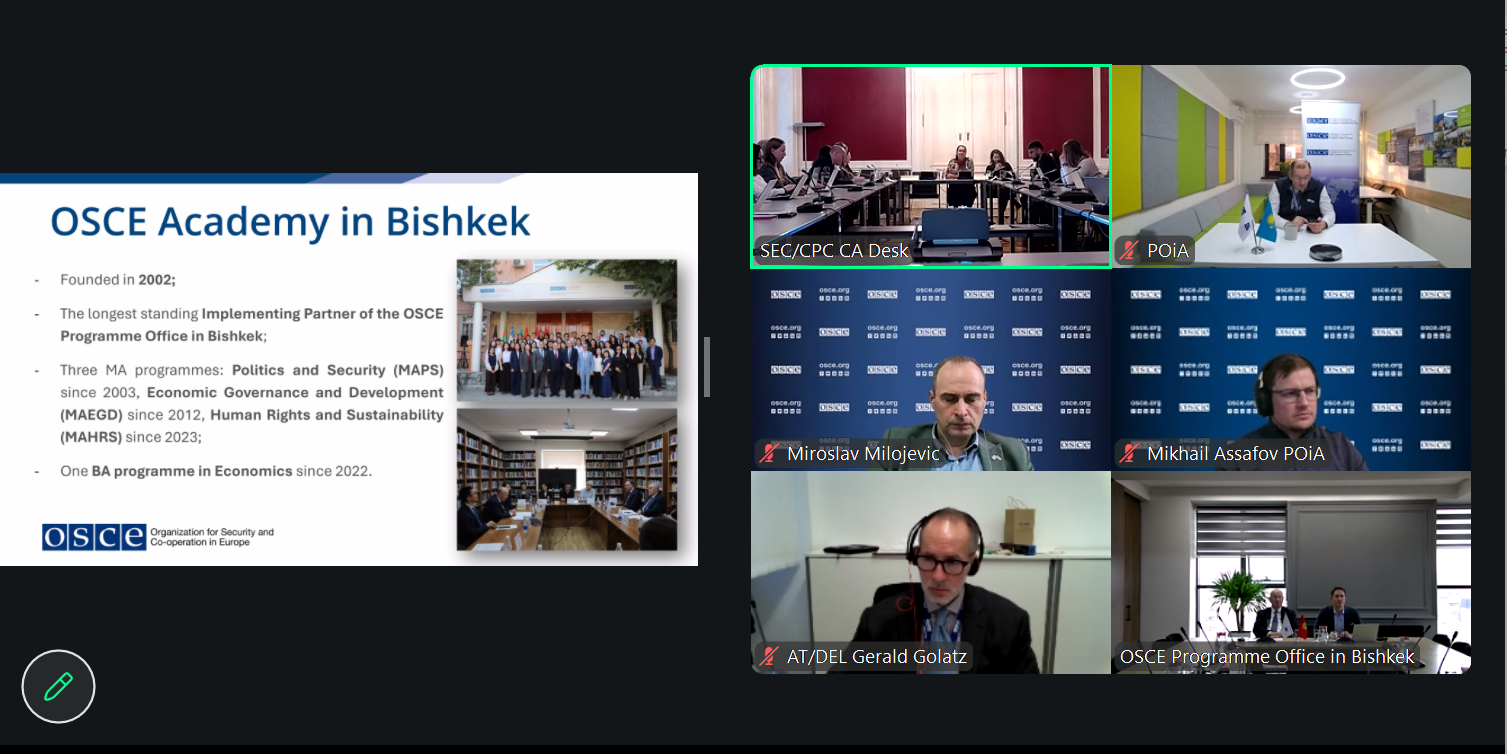
“I do not see this opportunity simply as an investment in my personal future. I see it as an investment in Afghanistan’s future,” said Mr. Akbari, expressing his hope to use the knowledge, research experience and professional networks gained at the Academy to contribute to Afghanistan’s academic, institutional and public life.
He added that “continued support is not simply about funding students today; it is about keeping alive the intellectual potential of a generation whose country needs it more than ever.”
Through its educational support, the OSCE Academy provides Afghan students with opportunities to pursue advanced studies, engage in regional research and gain professional experience in an international environment.